Music Research Forum: Music Education for People with Disabilities - Instruments, Teaching & Curriculum
Grainger Museum
Gate 13, Royal Parade
Parkville
Share via
Join us for the second in our series of music research talks for 2024, in partnership with the Musicological Society of Australia. The Museum will be open from 5:30pm, with the talk starting at 6pm. No bookings required.
Anthea Skinner, Leon de Bruin and Aaron Corn - Music Education for People with Disabilities: Instruments, Teaching & Curriculum.
Australia is a signatory to the 2006 United Nations Conventions on the Rights of Persons with Disabilities which states that everyone has the right to access education, regardless of disability. However, because instrumental music is usually offered as an extra- or para-curricular activity in Australian schools, many students with disability still struggle to access an equal music education. This problem is further exacerbated by a lack of instrumental music teacher training, accessible musical equipment and instrumentalists with disability to act as mentors in this country.
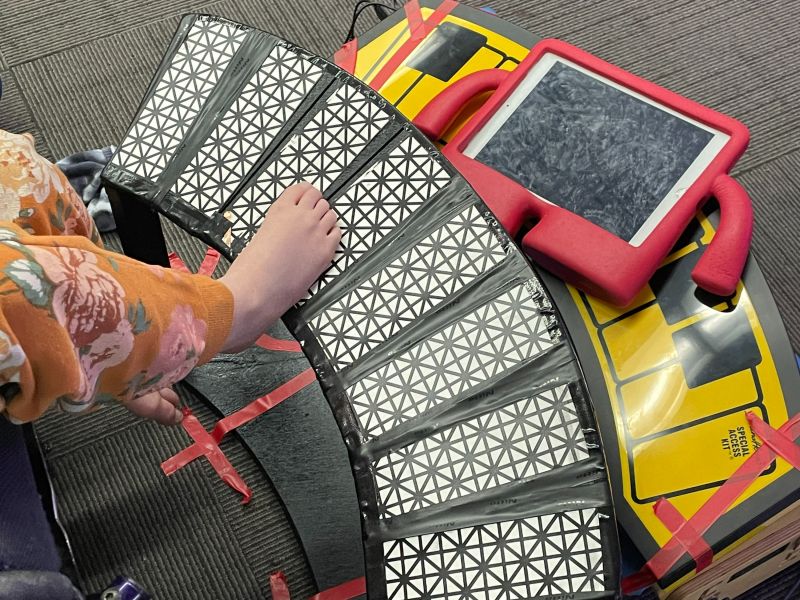
This presentation attempts to demystify techniques and technologies surrounding instrumental music education by exploring three distinct themes: instruments, teaching and curriculum. This will be done by focusing on the presenters’ experience with the Adaptive Music Bridging Program (AMBP). The AMBP is a project run by the University of Melbourne in conjunction with Melbourne Youth Orchestras (MYO) to provide preliminary instrumental education to students with disability aged 8 to 14. The program acts as a feeder into MYO’s mainstream program, with graduating students being supported to join a more senior ensemble.
In this presentation Aaron Corn will begin by discussing accessible musical instruments, looking both at simple ways to adapt standard instruments, and commercially available specialist adaptive instruments designed for people with specific disabilities. Then Leon de Bruin will discuss inclusive teaching methods and ways to ensure that everyone has a way to meaningfully contribute to musicmaking. Finally Anthea Skinner will look at ways to ‘crip’ the curriculum by focussing on the artistic strengths of existing musicians and composers with disability by including them within the curriculum while also valuing the unique skills of musicians with disability in the classroom.
Anthea Skinner is a musicologist specialising in disability music, organology and heritage archiving. She is a McKenzie Postdoctoral Research Fellow at the University of Melbourne. Anthea has published her research in prestigious journals including Disability and Society and Sexualities and has chapters in books published by Cambridge University Press and Brill. Anthea won the Australian Society of Archivists' 2021 Margaret Jennings Award and was a 2021 Summer Fellow with the Medical Heritage Library. Anthea is currently the coordinator of Melbourne Youth Orchestras' Adaptive Music Bridging Program providing instrumental music education to children with disability.
Leon de Bruin is Senior Lecturer in Music at the University of Melbourne, Conservatorium of Music, and co-ordinator of the Master of Music Performance Teaching degree (MMPT). As ASME National Past President he is a staunch advocate for quality music education in Australia, and music teacher education world-wide, as an executive of ISME Instrumental and Vocal Teaching Commission. His research spans pedagogy, relationality, and music psychology, in music teaching practice and teacher training. He has published over 80 articles, chapters, and edited books, including Musical Ecologies: Instrumental Music Ensembles around the World (Routledge); Revolutions in Music Education (Lexington) and Guerrilla Music (Lexington).
Aaron Corn is Inaugural Director of the Indigenous Knowledge Institute at the University of Melbourne. He is an ethnomusicologist has a background in organology, collections management and Indigenous knowledge, and collaborates closely with Australian Indigenous colleagues and communities on research projects. He serves as Director of the National Recording Project for Indigenous Performance in Australia and on the Board of Directors of the International Council for Traditional Music Study Group on Indigenous Music and Dance. He is currently the lead chief investigator on the Australian Research Council funded project ‘3D Printing of Custom Musical Instruments for Heritage and Industry Needs’ (LP190100419).